Short answer: Choose the chain by how the piece will be worn, match the findings metal to the chain, and buy chain by the spool if you make more than two or three pieces. A bead chain spool, a ball chain roll and a snake chain roll cover most necklace and bracelet projects between them, and a basic pliers-and-cutters kit finishes all three.
Chain by the spool: why rolls and spools
Chain sold by the spool or roll — a 2-metre spool, a 10-metre roll, a 10-yard spool — is cut to the length each piece needs. That suits makers who produce several necklaces or bracelets, or who sell made-to-length pieces, because one spool covers many projects and there is no per-piece chain cost to track. Chain sold by the piece suits a single project. If you are making more than two or three pieces, the spool is the economical form.
The Chains & Findings category stocks three spool forms: a Saturn bead chain spool (1.5mm chain with 2mm round beads, in 14K gold filled and S925 silver), a stainless steel ball chain roll (1.5–3mm, 10 metres, gold and silver tone), and a brass snake chain roll (10-yard spool). Each is a different look and feel, which is the subject of the next section.
Chain styles: bead, ball and snake
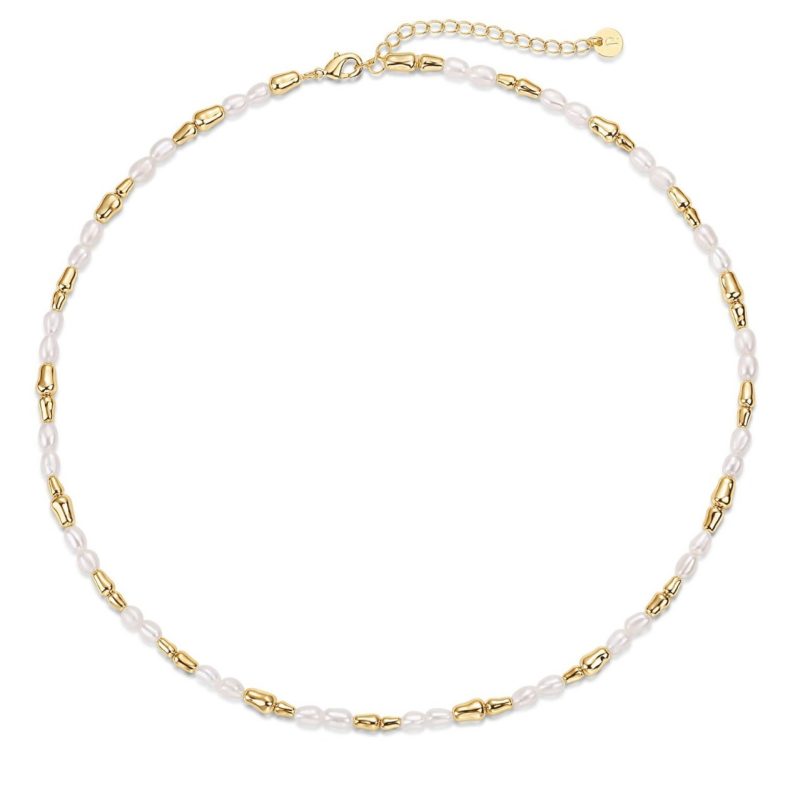
Bead chain — the Saturn style — has small round beads set at intervals along a fine chain. It reads as a finished, decorative chain on its own and is the style sold here for DIY permanent jewelry, where the chain is sized to stay on. Ball chain is a run of small spheres linked together: smooth, flexible and informal, and it takes pendants and charms easily because the spheres sit evenly. Snake chain is made of tightly linked plates that form a smooth, round, slightly stiff cord with a liquid shine; it holds its shape well and suits minimalist pieces worn on their own.
Thickness matters for both look and strength. Fine chain (around 1.5mm) suits delicate necklaces and layering; thicker chain reads bolder and handles heavier pendants. Match the chain to the pendant weight: a heavy pendant on a fine chain will pull, kink and wear faster.
Materials: gold filled, sterling silver, stainless steel, brass
14K gold filled means a layer of 14K gold mechanically bonded to a base core — a much thicker gold layer than standard gold plating, which is why it is the usual choice for pieces meant to be worn daily. S925 silver is sterling silver, 92.5% silver alloyed for strength. Stainless steel is a practical everyday metal: strong, low maintenance and a good match for ball chain. Brass has a warm yellow tone and suits vintage-style pieces; like all uncoated metals it will develop a patina with wear, which some makers want and others do not.
Keep the findings metal matched to the chain metal. Mixed metals are a style choice, but a clasp that does not match the chain is the detail people notice first, and different metals wear at different rates.
Findings: clasps, jump rings and connectors
Findings are the small hardware that turns a length of chain into a wearable piece. The lobster claw clasp is the everyday standard: secure, easy to open one-handed, and available to match every chain metal. Jump rings connect the clasp to the chain and attach charms and pendants; choose a ring whose wire thickness suits the chain — too thin and it pulls open, too thick and it will not close neatly. Crimp beads and covers finish beaded designs where the thread or wire needs a clean, secure end.
For permanent-style pieces — chain sized to stay on, finished without a clasp — the join is closed rather than clasped. That style needs the right finishing tools and a confident join; if you are starting out, make your first pieces with clasps and move to closed joins once your finishing is consistent.
Tools you will need
Three tools cover most chain work: chain-nose pliers for opening and closing jump rings, cutters for sizing chain cleanly, and flat-nose pliers for holding findings steady. The beginner tool kit in the Jewelry Making Tools category bundles pliers, tweezers and a findings set at $14.99, which is the fastest way to a working bench. Add a bead mat or tray and a ruler, and you have everything a chain project needs — no power tools, no heat, no chemicals.
Browse the Chains & Findings and Jewelry Making Tools categories.
What things cost
Chains in this category start from $6.99, and the Saturn bead chain spool starts from $34.99 for the silver variation. Spool pricing rewards makers: one spool makes many pieces, so the per-piece chain cost falls with every necklace or bracelet you finish. The tool kit is a one-time $14.99.
Frequently Asked Questions
How much chain do I need for one necklace?
Measure the length you want the finished piece to be, then add a little extra for the clasp and findings — a few centimetres is enough. Making the piece slightly long and trimming is easier than adding chain back.
What is the difference between gold filled and gold plated?
Gold filled has a thick layer of gold bonded to the core; gold plating is a thin surface coating. For everyday-wear pieces, gold filled is the more durable of the two, which is why it is used for the bead chain spool stocked here.
What size jump ring should I use?
Match the ring to the chain: the ring should pass through the end link comfortably and close fully without a gap. Keep a small assortment of sizes on the bench rather than buying one size for every project.
Can I mix metals in one piece?
Yes — mixed-metal pieces are a deliberate style. The practical rule is to match the findings to the chain at the join points, and to mix metals in the visible design rather than at a single stressed connection.
Do I need special tools for permanent-style jewelry?
The chain itself needs no special tools to cut and size, but a closed, clasp-free join must be finished securely. Start with clasped pieces while you learn, and move to closed joins once your finishing is consistent.
How should I store chain spools?
Keep spools in their packaging or in a small box, away from humidity, with the loose end secured so the chain does not tangle. Brass and silver both benefit from dry storage.